“During menopause, it’s important to look after yourself.
Healthy lifestyle choices will help to improve physical
and emotional symptoms at every stage of menopause”.1
Umbrella
What may the Hot Flushes Management Umbrella include?
Depending on the Source (DotS) this Umbrella may include:
- Hot Flashes/Flushes Healthy Living
- Hot Flashes/Flushes Management
Management
What may hot flushes management include?
DotS hot flushes management may include:
- Triggers
- Healthy Lifestyle
- Weight
- Smoking
- Stress
- Relaxation, Meditation, Mindfulness and Yoga
- Hypnosis
- Natural Products
- Phytoestrogens
- Non Hormone Treatment Effectiveness
- Hormone Therapy
1. Triggers
 What triggers can set off a hot flush?
In Hot Flashes: What Can Trigger A Hot Flash? the (United States) Cleveland Clinic elaborate:
- Hot weather or warm environments
- Being overheated, especially during exercise or when wearing heavy clothing
- Drinking caffeinated or alcoholic beverages
- Eating spicy foods
- Feeling stressed
- Drinking hot beverages like coffee, tea or hot chocolate
- Taking hot showers or baths
- Smoking cigarettes.
Avoiding things that trigger your hot flashes can be a great way to help manage how often you get hot flashes”.2
In Hot Flashes: Diagnosis & Treatment – Treatment: Self Care the (United States) Mayo Clinic explain:
- “Watch what you eat and drink. Hot and spicy foods and drinks with caffeine and alcohol can cause hot flashes”.3
In The 2023 Practitioner’s Toolkit for Managing Menopause: Management – Non-Hormonal Options With Evidence To Support Efficacy, published online 30 October 2023, the authors explain:
What are VMS?
VMS can be an abbreviation for Vasomotor Symptoms which include hot flushes and night sweats.
2. Healthy Lifestyle
Is there an association between health lifestyle choices and menopause symptoms?
In Looking After Yourself Around the Time of Menopause the (Australian) Jean Hailes for Women’s Health (JH) explain:
“It’s especially important to look after yourself around the time of menopause. Healthy lifestyle choices will help to improve physical and emotional symptoms”.5
3. Weight
Is there an association between weight and hot flushes?
In How To Managing Menopausal Symptoms: Managing Hot Flushes and Night Sweats – Maintain A Healthy Weight the JH note:
“Maintaining a healthy weight may help to improve menopausal symptoms. There is some evidence that weight gain can increase the severity of hot flushes and night sweats”.6
4. Smoking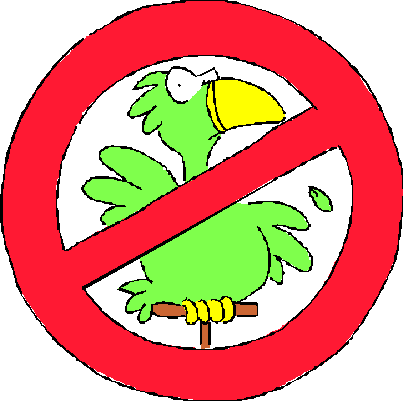
Is there an association between smoking and hot flushes?
According to the Mayo Clinic:
- “Don’t smoke. Smoking is linked to more hot flashes. By not smoking, you might ease hot flashes. You also may lower your risk of serious health conditions, such as heart disease, stroke and cancer”.7
5. Stress and Anxiety
Is there an association between stress and anxiety and hot flushes?
In Symptoms of Menopause: Hot Flushes & Night Sweats the JH elaborate on:
“Many studies suggest that stress and anxiety can influence the frequency and intensity of hot flushes”.8
6. Relaxation, Meditation, Mindfulness and Yoga
Is there an association between relaxation, meditation, mindfulness, yoga and hot flushes?
In Managing Your Symptoms: Managing Hot Flushes and Night Sweats – Reduce Stress the JH note:
Cognitive behavioural therapy (CBT) has been shown to be effective in managing hot flushes and night sweats. While CBT doesn’t usually reduce the frequency of hot flushes, it can reduce their impact.
There is some evidence that breathing and relaxation techniques can help you manage the impact of hot flushes.
Yoga has also been shown to be a safe and effective way to manage menopausal symptoms, including hot flushes”.9
In Hot Flashes: Diagnosis & Treatment – Treatment: Self Care the Mayo Clinic elaborate on:
- “Practice mind-body therapies. Some people get relief from mild hot flashes through meditation; slow, deep breathing; stress management techniques and guided imagery. Even if these approaches don’t help your hot flashes, they might do some good, such as helping you sleep better”.10
7. Hypnosis
Is there an association between hypnosis and hot flushes?
In 4 Things To Know About Menopausal Symptoms and Complementary Health Practices. 1 according to the NCCIH:
- “Mind and body practices such as hypnosis, mindfulness meditation, and tai chi may help improve some menopausal symptoms. Researchers looked at mind and body therapies for menopausal symptoms and found that tai chi and meditation-based programs may be helpful in reducing common menopausal symptoms including the frequency and intensity of hot flashes, sleep and mood disturbances, stress, and muscle and joint pain. There is also some evidence that hypnotherapy may help women manage hot flashes”.11
8. Natural Products
Is there an association between natural products and hot flushes?
In Menopause and Natural Therapies: Hot Flushes and Night Sweats the JH elaborate on:
 “Many herbal therapies have been tried for relief of hot flushes and night sweats in menopausal women. Some herbs have been found to be effective in reducing hot flushes, whereas others have been found to be no better than a placebo (dummy medicine). Some have not been studied rigorously”.12
9. Phytoestrogens
Is there an association between phytoestrogens and hot flushes?
In Hot Flashes: Diagnosis & Treatment – Alternative Medicine: Dietary Supplements the Mayo Clinic explain:
- “Plant estrogens. Some plants have substances that are like the hormone estrogen. Examples are soy, red clover and flaxseed. But studies most often have found that plant estrogens help menopause symptoms little or not at all. Research is ongoing”.13
10. Non Hormone Treatment Effectiveness
How effective are non hormone treatments for hot flashes?
In Hot Flashes: Treatments for Hot Flashes the Menopause Society (formerly the North American Menopause Society) explain:
 “Other measures are sometimes encouraged or tried for hot flashes but have limited solid data available to evaluate their effectiveness—or they have failed to show significant benefits in clinical trials:
- Acupuncture
- Chiropractic interventions
- Cooling techniques, such as adjusting clothing or environmental temperature
- Dietary modifications
- Dietary supplements such as ammonium succinate, black cohosh, cannabinoids such as marijuana, chasteberry, dong quai, evening primrose, ginseng, Lactobacillus acidophilus, maca, milk thistle, omega-3 fatty acid, pollen extract, rhubarb, vitamin E, and wild yam (dioscorea)
- Exercise and yoga
- Mindfulness-based interventions
- Paced breathing
- Relaxation techniques
- Soy foods, soy extracts, and soy metabolite equol (S-equol)
- Trigger avoidance, such as alcohol, caffeine, spicy foods, or hot foods
That’s not to say that none of these measures have value. In particular, lifestyle measures such as a healthy diet, regular exercise, and stress management through relaxation techniques may play a vital role in chronic disease prevention and a woman’s overall health”.14
In The 2023 Practitioner’s Toolkit for Managing Menopause: Management – Non-Hormonal Options With Evidence To Support Efficacy, published online 30 October 2023, the authors explain:
11. Hormone Therapy
What is the most effective treatment for hot flushes?
On page one in The Menopause Society Statement on Misinformation Surrounding Hormone Therapy: Indications for the Use of Hormone Therapy, published October 2024, the Menopause Society note:
Health Care Provider
What if I would like help with my hot flushes management?
If you would like help with your hot flushes management, it may be in your best interest to choose to talk to your health care provider about this. Together you can look for a pattern, discuss your options and if required, agree on who maybe the best person to help you.
The Mayo Clinic note:
“Talk to your healthcare professional about the pros and cons of treatments for hot flashes. If hot flashes don’t bother you much, you likely don’t need treatment. For most people, hot flashes go away slowly, even without treatment. But it can take several years for them to stop”.17
Health Topics A-Z
Where may I find Health Topics A-Z related to Hot Flushes Management?
In Health Topics A-Z you may find:
Links
Where may I find Links related to Hot Flushes Management?
Your Country may have Links similar to:
Links
This Links List to third party websites is neither comprehensive nor exhaustive. Inclusion on this Links List does not imply endorsement or recommendation. Non-inclusion on this Links List does not imply non-endorsement or non-recommendation. Third party websites are not under the control of Meno Martha International Menopause Directory. Third party websites may contain explicit medical images and/or sexual references. Please read Meno Martha International Menopause Directory’s Links Policy before proceeding to a Link. Please contact Webmaster if you experience a problem with a Link.New or Updated
- 8 Myths and Truths About Menopausal Hot Flashes
- ACOG Explains: Managing Menopause Symptoms [American College of Obstetricians and Gynecologists]
- An Ob-Gyn’s Top Tips for Managing Hot Flashes
- Askearlymenopause.org [Ask EM] [+ Video: What Is Early Menopause?]
- BMS TV: Bioidentical Hormones
- BMS TV: Hormone Replacement Therapy (HRT)
- Bioidentical Hormone Therapy
- Bioidentical Hormones: Are They Safer?
- Cognitive Behaviour Therapy (CBT) for Menopausal Symptoms
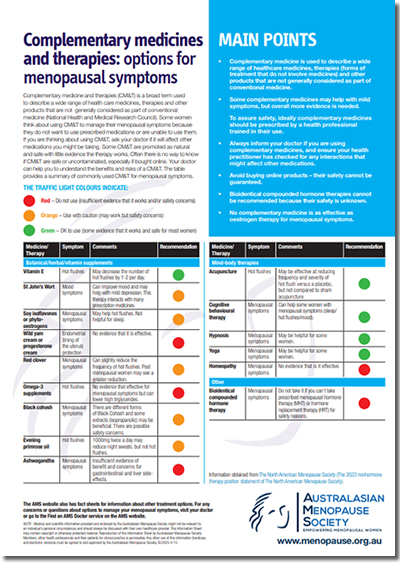 Complementary & Alternative Therapies: Non-Hormonal Treatments for Menopause Symptoms
- Complementary Medicines and Therapies for Hot Flushes
- Complementary Medicines and Therapies: Options for Menopausal Symptoms
- Compounded Bioidentical Hormone Therapy [Video]
- Consumer Video and Podcast Series: 2023 Consumer Videos and Podcasts – NAMS 2023 Nonhormone Therapies Position Statement for Bothersome Menopause Symptoms
- Consumer Video and Podcast Series: 2023 Consumer Videos and Podcasts – New FDA-Approved Nonhormone Option for the Treatment of Hot Flashes
- Consumer Video and Podcast Series: 2024 Consumer Videos and Podcasts – Cognitive Behavioral Therapy and Menopause
- Consumer Video and Podcast Series: 2024 Consumer Videos and Podcasts – Preparing for Your Menopause Healthcare Visit
- Deciding About Hormone Therapy
- Deciding About Hormone Therapy Use
- Find A Menopause Practitioner [United States and Other]
- Find A Practitioner [Australasian Menopause Society i.e. Australia and New Zealand]
- Find Your Nearest BMS Menopause Specialist [British Menopause Society]
- HRT Questions Answered
- HRT – Types, Doses and Regimens
- HRT: Benefits and Risks
- Handling Hot Flushes and Night Sweats| Dr Louise Newson
- Hormone Replacement Therapy (HRT)
- Hormone Replacement Therapy (HRT): Alternatives To Hormone Replacement Therapy (HRT)
- Hormone Therapy: Four Things A Mayo Clinic Women’s Health Specialist Wants You To Know [+ Video]
- Hormone Therapy: Is It Right for You?
- Hot Flashes
- Hot Flashes
- Hot Flashes
- Hot Flashes: Diagnosis & Treatment
- Hot Flashes: Possible Causes – What Causes A Hot Flash? What Can Trigger A Hot Flash?
- Hot Flashes: What Can I Do? [+ Video: What Are the Signs and Symptoms of Menopause?]
- Hot Flushes, Night Sweats, Brain Fog? Here’s What We Know About Phytoestrogens for Menopausal Symptoms
- How Fezolinetant Changes Management of Hot Flashes [Video]
- How Long Will I Have Hot Flashes and What Causes Them?
- How To Manage Menopausal Symptoms: Managing Hot Flushes and Night Sweats
- How To Manage and Reduce Stress
- IMS Interview Series for Women: Lifestyle Medicine With Prof. Rossella Nappi | For Women
- Joint Position Statement By the British Menopause Society, Royal College of Obstetricians and Gynaecologists and Society for Endocrinology on Best Practice Recommendations for the Care of Women Experiencing the Menopause
- Later Years (Around 50 Years and Over): Menopause and Post Menopause Health – Signs and Symptoms of Menopause [+ Video: Talking Menopause With Your GP] [Other Languages and Formats]
- Looking After Yourself Around the Time of Menopause
- Managing Menopause
- Managing Menopause Symptoms [+ Video]
- Mayo Clinic Minute: Help With Hot Flashes Due To Menopause [+ Video Courtesy: Mayo Clinic News Network]
- Mayo Clinic Minute: How Lifestyle Changes May Help Manage Menopause Symptoms [+ Video]
- Mayo Clinic Minute: Perimenopause and Menopause [+ Video Courtesy: Mayo Clinic News Network]
- Meditation: A Simple, Fast Way To Reduce Stress
- Menopause
- Menopause
- Menopause
- Menopause
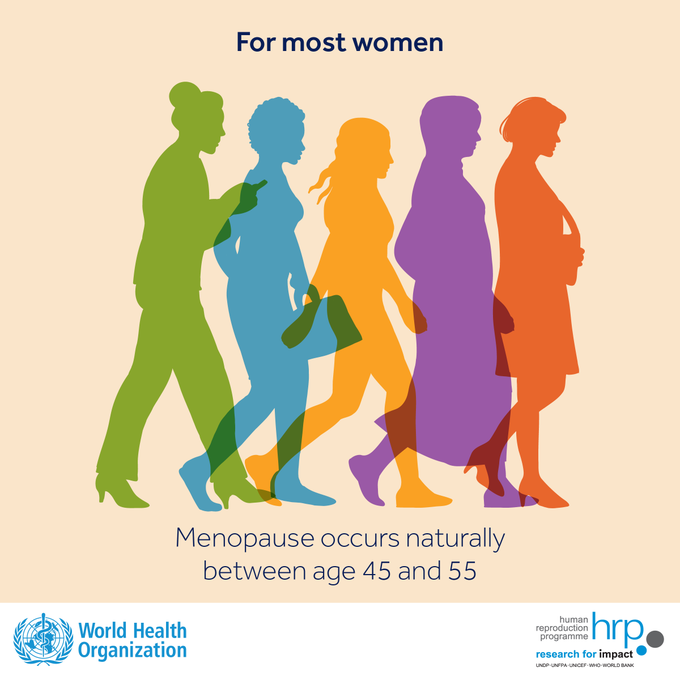
- Menopause: Identification and Management NICE Guideline Published: 12 November 2015 Last Updated: 07 November 2024]

- Menopause: Identification and Management: NICE Guideline [NG23] [07 November 2024]
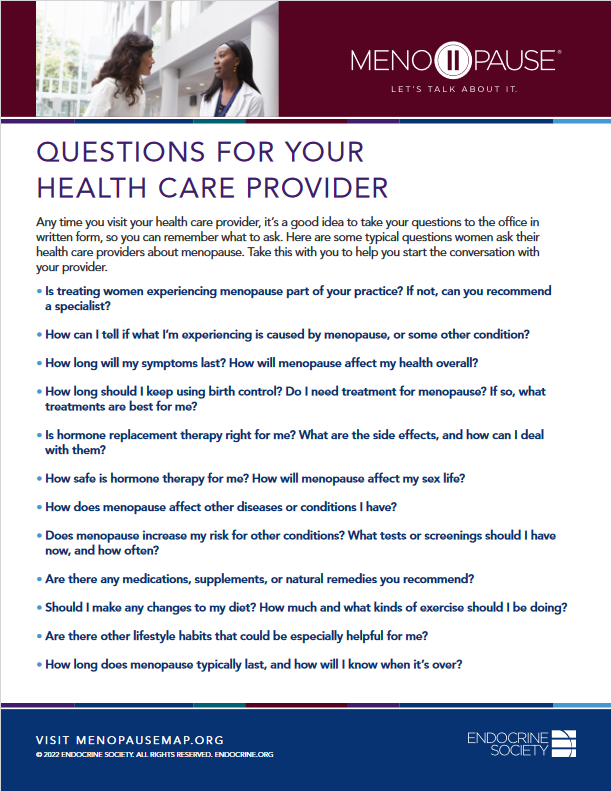
- Menopause Map: Downloadable Resources – My Personal Path Print Tools: Questions for Your Health Care Provider
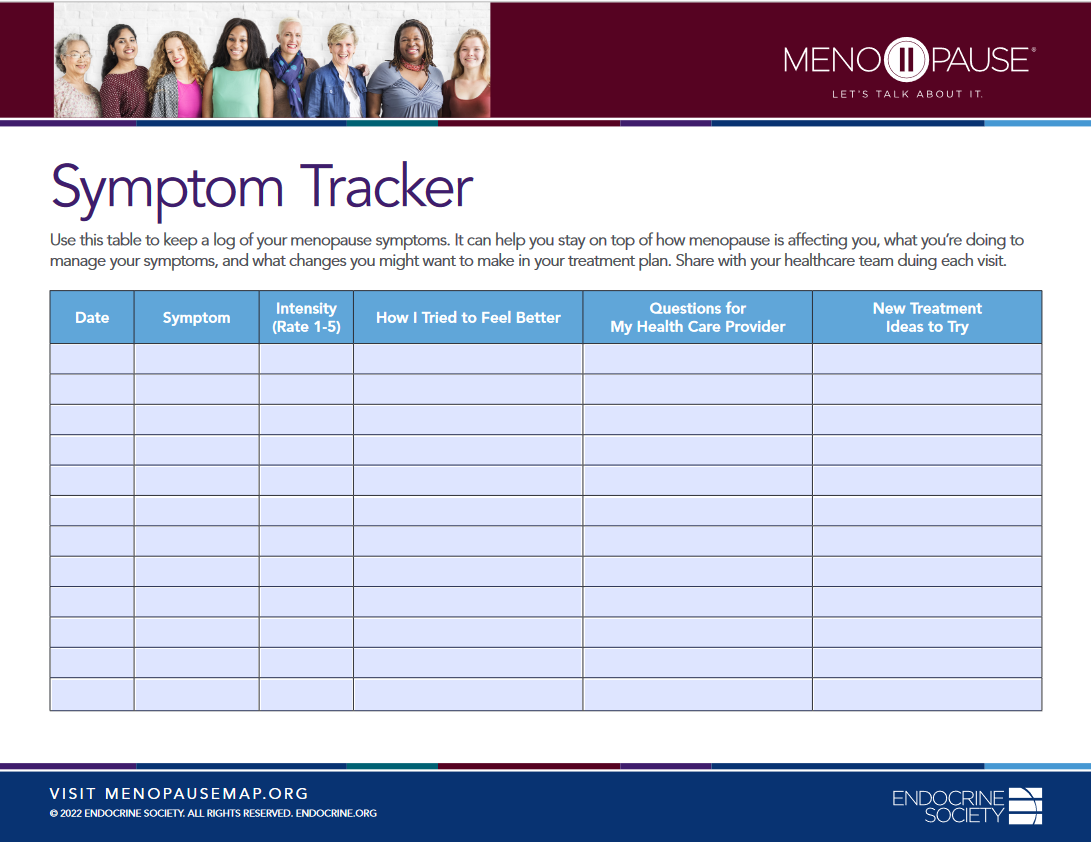
- Menopause Map: Downloadable Resources – My Personal Path Print Tools: Symptom Tracker
- Menopause Patient Information [Videos] 4. The Different Types of HRT
- Menopause Patient Information [Videos] 5. Lifestyle Advice In Menopause & Perimenopause
- Menopause Symptoms: Hot Flashes
- Menopause Symptoms: Mayo Clinic Expert Outlines Hormone and Nonhormonal Therapies
- Menopause Treatment
- Menopause Treatments: What Works, What Doesn’t
- Menopause, Perimenopause, Hormone Therapy and Other Treatments With Madelyn Butler, MD [Podcast]
- Menopause-Related Hot Flashes and Night Sweats Can Last for Years
- Menopause: Diagnosis & Treatment
- Menopause: Understanding the Changes and Finding Relief | Dr Susan Davis | The Proof Podcast EP 256
- National Center for Complementary and Integrative Health: Flaxseed and Flaxseed Oil
- National Center for Complementary and Integrative Health: Herbs At A Glance
- National Center for Complementary and Integrative Health: How Safe Is This Product or Practice?
- National Center for Complementary and Integrative Health: Milk Thistle [Silybum Marianum]
- National Center for Complementary and Integrative Health: Red Clover
- National Center for Complementary and Integrative Health: Sage
- National Center for Complementary and Integrative Health: Soy
- Natural Remedies To Help Manage Perimenopause Symptoms
- Navigating Menopause: Expert Insights and Solutions | Dr Susan Davis | The Proof Podcast EP 245
- Navigating Menopause: Honest Answers To All Your Questions [+ Video: What To Expect in Menopause]
- Navigating Menopause Care Resource Guide
- Non-Estrogen Treatments for Menopausal Symptoms
- Nonhormone Treatments for Hot Flashes and Night Sweats
- Office of Dietary Supplements: Black Cohosh
- Office of Dietary Supplements: Dietary Supplement Fact Sheets
- Perimenopause and Menopause Checklist: Translated Checklists
- Perimenopause: Symptoms and Causes
- Physical Activity and Exercise for Hot Flashes: Trigger or Treatment?
- Resources: Fact Sheets

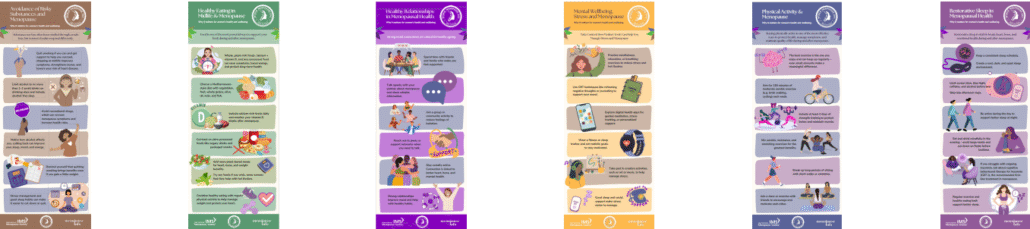
- Resources: Infographics
- Risks and Benefits of MHT
- Supplements: What Works, What Doesn’t and the Truth About Menowashing
- Symptoms of Menopause: Hot Flushes & Night Sweats
- The 2023 Practitioner’s Toolkit for Managing Menopause
- The Menopause Society Statement on Misinformation Surrounding Hormone Therapy
- Tips To Help Manage Menopause Symptoms
- Videos & Podcasts: Videos – Menopause and Hormone Therapy: Current Perspectives and Controversies
- Webinars: Non-Hormonal Pharmacological Interventions For VMS
- Webinars: Non-Pharmacological Interventions For VMS
- What Are the Most Common Symptoms of Menopause? And Which Can Hormone Therapy Treat?
- What Can I Do To Help With Hot Flashes?
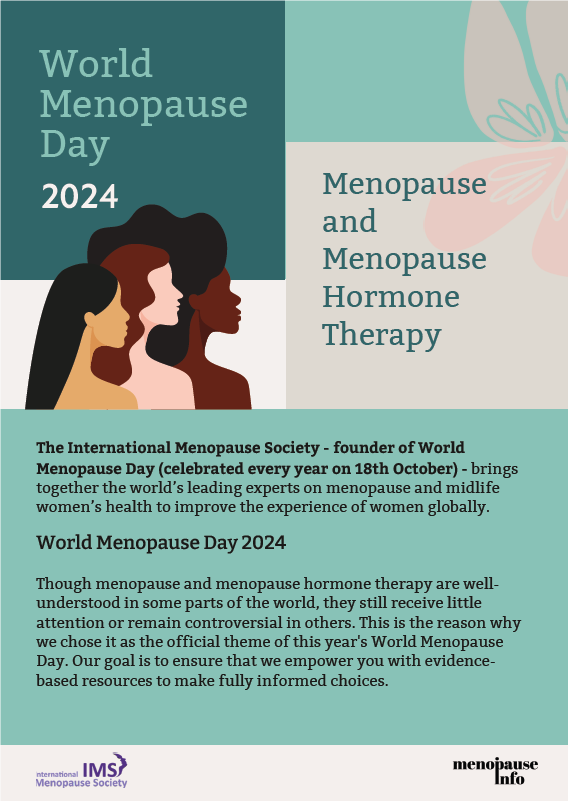 World Menopause Day 2024: Leaflet for Women [Multiply Languages]
Sources
Where may I find the Sources quoted?
You may find the Sources quoted at:
Sources
- Looking After Yourself Around the Time of Menopause. Last Updated: 30 September 2025 | Last Reviewed: 19 March 2025. Jean Hailes for Women’s Health https://www.jeanhailes.org.au/health-a-z/menopause/looking-after-yourself Accessed: 29 November 2025
- Hot Flashes: What Triggers A Hot Flash? Last Reviewed: 21 October 2024. Cleveland Clinic https://my.clevelandclinic.org/health/articles/15223-hot-flashes Accessed: 29 November 2025
- Hot Flashes: Diagnosis & Treatment – Treatment: Self Care. 04 March 2025. Mayo Clinic https://www.mayoclinic.org/diseases-conditions/hot-flashes/diagnosis-treatment/drc-20352795 Accessed: 29 November 2025
- Davis, S. R., Taylor, S., Hemachandra, C., Magraith, K., Ebeling, P. R., Jane, F., and Islam, R. M. The 2023 Practitioner’s Toolkit for Managing Menopause: Management – Non-Hormonal Options With Evidence To Support Efficacy. Published Online: 30 October 2023 https://www.tandfonline.com/doi/full/10.1080/13697137.2023.2258783 Accessed: 29 November 2025
- Looking After Yourself Around the Time of Menopause. Last Updated: 30 September 2025 | Last Reviewed: 19 March 2025. Jean Hailes for Women’s Health https://www.jeanhailes.org.au/health-a-z/menopause/looking-after-yourself Accessed: 29 November 2025
- How To Manage Menopausal Symptoms: Managing Hot Flushes and Night Sweats – Maintain A Healthy Weight. Last Updated: 19 May 2025 | Last Reviewed: 22 April 2025. Jean Hailes for Women’s Healthhttps://www.jeanhailes.org.au/health-a-z/menopause/managing-your-symptoms#managing-hot-flushes-and-night-sweats Accessed: 29 November 2025
- Hot Flashes: Diagnosis & Treatment – Treatment: Self Care. 04 March 2025. Mayo Clinic https://www.mayoclinic.org/diseases-conditions/hot-flashes/diagnosis-treatment/drc-20352795 Accessed: 29 November 2025
- Symptoms of Menopause: Hot Flushes and Night Sweats. Last Updated: 15 October 2025 | Last Reviewed: 23 April 2025. Jean Hailes for Women’s Health https://www.jeanhailes.org.au/health-a-z/menopause/menopause-symptoms Accessed: 29 November 2025
- Managing Your Symptoms: Managing Hot Flushes and Night Sweats – Reduce Stress. Last Updated: 19 May 2025 | Last Reviewed: 22 April 2025. Jean Hailes for Women’s Healthhttps://www.jeanhailes.org.au/health-a-z/menopause/managing-your-symptoms#managing-hot-flushes-and-night-sweats Accessed: 29 November 2025
- Hot Flashes: Diagnosis & Treatment – Treatment: Self Care. 04 March 2025. Mayo Clinic https://www.mayoclinic.org/diseases-conditions/hot-flashes/diagnosis-treatment/drc-20352795 Accessed: 29 November 2025
- 4 Things To Know About Menopausal Symptoms and Complementary Health Practices. 4. National Center for Complementary and Integrative Health https://nccih.nih.gov/health/tips/menopause Accessed: 06 February 2025
- Menopause and Natural Therapies: Hot Flushes and Night Sweats. Last Updated: 19 January 2024 | Last Reviewed: 20 November 2018. Jean Hailes for Women’s Health https://jeanhailes.org.au/health-a-z/natural-therapies-supplements/phytoestrogens Assessed: 06 February 2025
- Hot Flashes: Diagnosis & Treatment – Alternative Medicine: Dietary Supplements. 04 March 2025. Mayo Clinic https://www.mayoclinic.org/diseases-conditions/hot-flashes/diagnosis-treatment/drc-20352795 Accessed: 06 February 2025
- Hot Flashes: Treatments for Hot Flashes. Menopause Society https://menopause.org/patient-education/menopause-topics/hot-flashes Accessed: 29 November 2025
- Davis, S. R., Taylor, S., Hemachandra, C., Magraith, K., Ebeling, P. R., Jane, F., and Islam, R. M. The 2023 Practitioner’s Toolkit for Managing Menopause: Management – Non-Hormonal Options With Evidence To Support Efficacy. Published Online: 30 October 2023 https://www.tandfonline.com/doi/full/10.1080/13697137.2023.2258783 Accessed: 29 November 2025
- The Menopause Society Statement on Misinformation Surrounding Hormone Therapy: Indications for the Use of Hormone Therapy. 2024:1. Menopause Society https://menopause.org/wp-content/uploads/2024/09/TMS-statement-on-HT-Misinformation.pdf Accessed: 29 November 2025
- Hot Flashes: Diagnosis & Treatment – Treatment. 04 March 2025. Mayo Clinic https://www.mayoclinic.org/diseases-conditions/hot-flashes/diagnosis-treatment/drc-20352795 Accessed: 29 November 2025
Topic Last Updated: 29 November 2025 – Topic Last Reviewed: 29 November 2025