
“Cancer risk from HRT is small and depends on many
different things. This includes the type of HRT used,
how long someone takes it for, their age, and…”.1
Umbrella
What may the Hormone Therapy and Cancer Risk Umbrella include?
Depending on the Source (DotS) this Umbrella may include:
- Bowel/Colon/Rectum Cancer
- Breast Cancer
- Cancer
- Cervical Cancer/Cancer of the Cervix
- Hormone Replacement Therapy (HRT)
- Hormone Therapy (HT)
- Lung Cancer
- Menopausal Hormone Therapy (MHT)
- Ovarian Cancer/Cancer of the Ovary
- Uterine/Womb/Endometrial Cancer
Terminology
What can it be important to be clear about with hormone therapy (HT), hormone replacement therapy (HRT) or menopausal hormone therapy (MHT) and cancer information?
It can be important to be clear about the type of HT such as estrogen therapy (ET) or estrogen plus progestogen therapy (EPT).
What can it also be important to be clear about with HT, HRT or MHT and cancer information?
It can also be important to be clear about the type of cancer (e.g. breast, ovarian or uterus/womb cancer).
Risk
What is cancer risk from HT?
In Does Hormone Replacement Therapy (HRT) Increase the Risk of Cancer? Should I Take HRT? the (United Kingdom) Cancer Research UK elaborate on:
Who is a GP?
Dots and/or DotC (Depending on the Country) a GP may be a registered general practitioner, a medical practitioner, a medical doctor or a doctor.
Cancer Risk Reduction
How can the risk of cancer be reduced?
In Does Hormone Replacement Therapy (HRT) Increase the Risk of Cancer? Should I Take HRT? Cancer Research UK also note:
- Stopping smoking
- Keeping a healthy weight
- Drinking less alcohol”.3
Risks and Benefits
Is HT effective for the treatment of menopausal symptoms?
In Risks and Benefits of MHT: Key Points the Australasian Menopause Society elaborate on:
- “For the majority of symptomatic women, the benefits of menopausal hormone therapy (MHT) outweigh the risks”.4
Breast Cancer Risk

 Can taking HT increase breast cancer risk?
In Hormone Therapy for Women: Benefits and Risks the (United States) Menopause Society (formerly the North American Menopause Society) include:
- “Breast cancer — If you are wondering whether HT causes cancer, there is some good news for women who use ET. Women can use ET for 7 years before the breast cancer risk increases. The risk goes up after 3 to 5 years for women who use EPT. Their risk might be lower if they take micronized progesterone intermittently and start HT early”.5
Ovarian Cancer Risk
Can taking HT increase ovarian cancer risk?
On page two in HRT Benefits and Risks, published November 2020, the (British) Women’s Health Concern note:
“Recent evidence from the Collaborative Group on Hormonal Factors demonstrated that there may be a slight increased risk of some types of ovarian cancer associated with HRT use but this is small and equates to around 1 extra case of ovarian cancer per 1000 HRT users”.6
Cancer of the Uterus
Can taking HT increase cancer of the uterus risk?
On page one in Deciding About Hormone Therapy Use: Potential Risks, published February 2025, the Menopause Society explain:
“If you have a uterus and take estrogen with progestogen, there is no increased risk of cancer of the uterus”.7
HT or Not
Who should not use HT?
In Hormone Therapy: Frequently Asked Questions – Who Should Not Use Hormone Therapy? the Menopause Society note:
“Hormone therapy is not a good choice for every woman. For some, the risks outweigh the benefits, so careful consideration with a healthcare professional is advised. In general, women who have breast cancer, uterine cancer, unexplained uterine bleeding, liver disease, a history of blood clots, and cardiovascular disease should not use hormone therapy”.8
Hormone Therapy Alternatives
What are some HT alternatives?
In Management of Menopausal Symptoms: A Review, published 07 March 2023, the authors note:
“For women who are not candidates for hormonal treatments, nonhormonal approaches such as citalopram, desvenlafaxine, escitalopram, gabapentin, paroxetine, and venlafaxine are available and are associated with a reduction in frequency of vasomotor symptoms by approximately 40% to 65%. Low-dose vaginal estrogen is associated with subjective improvement in GSM symptom severity by approximately 60% to 80%, with improvement in severity by 40% to 80% for vaginal prasterone, and with improvement in severity by 30% to 50% for oral ospemifene”.9
Health Care Provider
If I choose to use HT what are my risks of cancer?
On page one in Deciding About Hormone Therapy Use the Menopause Society explain:
 “Every woman is different, and you will decide about whether to use HT based on the severity of your symptoms, your personal and family health history, and your own beliefs about menopause treatments. Your healthcare professional will be able to help you with your decision”.10
Health Topics A-Z
Where may I find Health Topics A-Z related to Hormone Therapy and Cancer Risk?
In Health Topics A-Z you may find:
Links
Where may I find Links related to Hormone Therapy and Cancer Risk?
Your Country may have Links similar to:
Links
This Links List to third party websites is neither comprehensive nor exhaustive. Inclusion on this Links List does not imply endorsement or recommendation. Non-inclusion on this Links List does not imply non-endorsement or non-recommendation. Third party websites are not under the control of Meno Martha International Menopause Directory. Third party websites may contain explicit medical images and/or sexual references. Please read Meno Martha International Menopause Directory’s Links Policy before proceeding to a Link. Please contact Webmaster if you experience a problem with a Link.New or Updated
- FDA Direct: Removing Black Box Warnings for HRT (Part 1/2) [10 November 2025]
- FDA Direct: Removing Black Box Warnings for HRT (Part 2/2) [11 November 2025]
- HRT, Breast Cancer and the Real Risks of Not Taking Hormones [06 April 2026]
- Menopausal Hormone Therapy for Breast Cancer Patients: What Is the Current Evidence? [January 2026]
- Pros and Cons of HRT Patches [16 December 2025]
- What Is Low-Dose Estrogen Therapy? [11 March 2026]
- World Menopause Day 2024: Leaflet for Women [Multiply Languages]
- Askearlymenopause.org [Ask EM] [+ Video: What Is Early Menopause?]
- BMS TV: HRT and Breast Cancer: Overall Risks and Benefits
- BMS TV: HRT and the Risk of Breast Cancer
- BMS TV: Hormone Replacement Therapy (HRT)
- Bioidentical Hormones: Are They Safer?
- Breast Cancer At the Menopause
- Breast Cancer Risk Factors
- Breastcancer.org
- Cancer
- Cancer Diagnosis: 11 Tips for Coping
- Cognitive Behaviour Therapy (CBT) for Menopausal Symptoms
- Consumer Video and Podcast Series: 2023 Consumer Videos and Podcasts – Lifestyle Modification and Prevention of Breast Cancer
- Consumer Video and Podcast Series: 2023 Consumer Videos and Podcasts – Premature and Early Menopause
- Deciding About Hormone Therapy
- Deciding About Hormone Therapy Use
- Does Hormone Replacement Therapy Increase Cancer Risk?
- Estrogen Dependent Cancers
- Experts Answer Your Menopause Questions In Video
- FAQs: Hormone Therapy for Menopause
- Find A Menopause Practitioner [United States and Other]
- Find A Practitioner [Australasian Menopause Society i.e. Australia and New Zealand]
- Find Your Nearest BMS Menopause Specialist [British Menopause Society]
- Genitourinary Syndrome of Menopause
- Gynecological Cancer At the Menopause
- HRT
- HRT Types and Doses | Dr Louise Newson
- HRT – Types, Doses and Regimens
- HRT, Breast Cancer and the Real Risks of Not Taking Hormones
- HRT: Benefits and Risks
- Hormone Replacement Therapy (HRT)
- Hormone Replacement Therapy (HRT): Benefits and Risks of Hormone Replacement Therapy (HRT)
- Hormone Replacement Therapy (HRT): Vaginal Oestrogen: Common Questions About Vaginal Oestrogen
- Hormone Therapy: Is It Right for You?
- How To Prevent Cancer: 6 Ways To Lower Your Risk
- IMS Statement: US HHS Revises Black Box Warning for Menopause Hormone Therapy [International Menopause Society]
- Later Years (Around 50 Years and Over): Menopause and Post Menopause Health – Hormone Replacement Therapy (HRT) [+ Video: Is HRT Bad for You?]
- Menopausal Hormone Therapy for Breast Cancer Patients: What Is the Current Evidence?
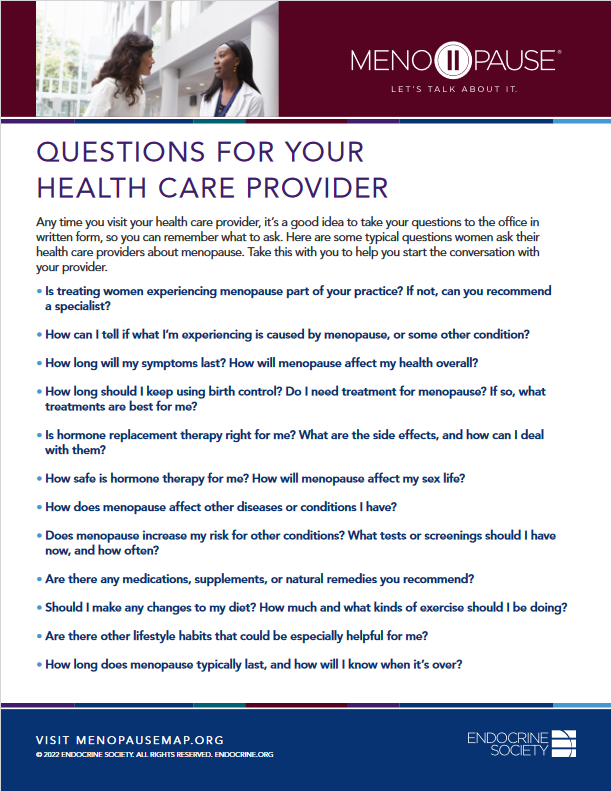
- Menopause Map: Downloadable Resources – My Personal Path Print Tools: Questions for Your Health Care Provider
- Menopause Symptoms: Mayo Clinic Expert Outlines Hormone and Nonhormonal Therapies
- Menopause Treatment
- Menopause Treatment Options After Cancer
- Menopause and HRT
- Menopause: Identification and Management [NICE Guideline]
- Menopause: Identification and Management [NICE Guideline]

- Nonhormone Treatments for Hot Flashes and Night Sweats
- Pros and Cons of HRT Patches
- Risks and Benefits of MHT
- The 2023 Practitioner’s Toolkit for Managing Menopause
- The Women’s Health Initiative Randomized Trials of Menopausal Hormone Therapy and Breast Cancer: Findings In Context
- Treatments for Menopause
- Types of Hormone Therapy
- Ultra-Low Dose Menopausal Hormone Therapy [Multiply Languages]
- Updated 2024 NICE Menopause Guidance Summary
- Using HRT (Hormone Replacement Therapy)
- Vaginal Dryness After Menopause: How To Treat It?
- Vaginal Oestrogen Is A Treatment on the Rise, But Is It Safe?
- Video & Podcast Library: Videos – World Menopause Day 2024: Menopause and Hormone Therapy: Current Perspectives and Controversies
- Videos & Podcasts: Videos – Menopause and Hormone Therapy: Current Perspectives and Controversies
- Videos and Podcasts: Videos – The Women’s Health Initiative – What Can We Believe?
- World Menopause Day 2024: Leaflet for Women – Menopause and Menopause Hormone Therapy [Multiply Languages]
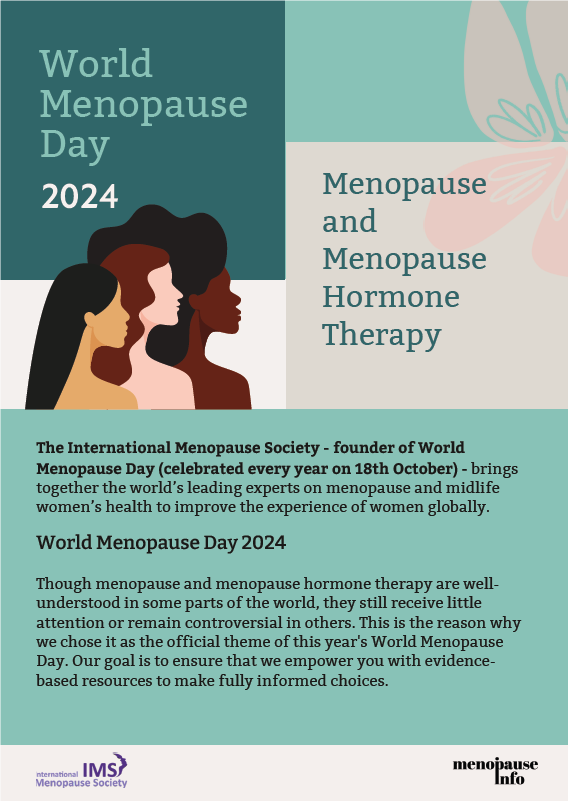 World Menopause Day 2024: Poster for Women – The 5 Ws of Menopause Hormone Therapy (MHT)
- World Menopause Day 2024: The IMS White Paper: Menopause and MHT In 2024: Addressing the Key Controversies [Multiply Languages]
Sources
Where may I find the Sources quoted?
You may find the Sources at:
Sources
- Does Hormone Replacement Therapy (HRT) Increase the Risk of Cancer? Should I Take HRT? Last Reviewed: 22 March 2023. Cancer Research UK. https://www.cancerresearchuk.org/about-cancer/causes-of-cancer/hormones-and-cancer/does-hormone-replacement-therapy-increase-cancer-risk#breast Accessed: 09 April 2026
- Does Hormone Replacement Therapy (HRT) Increase the Risk of Cancer? Should I Take HRT? Last Reviewed: 22 March 2023. Cancer Research UK. https://www.cancerresearchuk.org/about-cancer/causes-of-cancer/hormones-and-cancer/does-hormone-replacement-therapy-increase-cancer-risk#breast Accessed: 09 April 2026
- Does Hormone Replacement Therapy (HRT) Increase the Risk of Cancer? Should I Take HRT? Last Reviewed: 22 March 2023. Cancer Research UK. https://www.cancerresearchuk.org/about-cancer/causes-of-cancer/hormones-and-cancer/does-hormone-replacement-therapy-increase-cancer-risk#breast Accessed: 09 April 2026
- Risks and Benefits of MHT: Key Points. Content Updated January 2021. Australasian Menopause Society https://www.menopause.org.au/hp/information-sheets/risks-and-benefits-of-mht-hrt Accessed: 09 April 2026
- Hormone Therapy: Hormone Therapy for Women – Benefits and Risks Potential Risks. The Menopause Society https://menopause.org/patient-education/menopause-topics/hormone-therapy Accessed: 09 April 2026
- HRT Benefits and Risks. Updated: November 2020:2. Women’s Health Concern https://www.womens-health-concern.org/help-and-advice/factsheets/hrt-know-benefits-risks/ Accessed: 09 April 2026
- Deciding About Hormone Therapy Use: Potential Risks. February 2025:1. The Menopause Society https://menopause.org/patient-education/menopause-topics/hormone-therapy Accessed: 09 April 2026
- Hormone Therapy: Frequently Asked Questions – Who Should Not Use Hormone Therapy? The Menopause Society https://menopause.org/patient-education/menopause-topics/hormone-therapy Accessed: 09 April 2026
- Crandall, C. J., Mehta, J. M., Manson, J. E. Management of Menopausal Symptoms: A Review. 07 March 2023 https://pubmed.ncbi.nlm.nih.gov/36749328/ Accessed: 09 April 2026
- Deciding About Hormone Therapy Use: Potential Risks. February 2025: 1. The Menopause Society https://menopause.org/patient-education/menopause-topics/hormone-therapy Accessed: 09 April 2026
Topic Last Updated: 09 April 2026 – Topic Last Reviewed: 09 April 2026