
“After menopause, UTIs are rarely caused by having
a new partner or more sex, or by trying new sex positions,
toys, or lubricants. There’s also no reason to blame…”.1
Umbrella
What may the Urinary Tract Infection Umbrella include?
Depending on the Source (DotS) this Umbrella may include:
- Cystitis
- Pyelonephritis
- Urethritis
- Urinary Tract Infection (UTI)
Urinary Tract Infection
What is a urinary tract infection (UTI)?
DotS the definition of a UTI may vary. The (United States) Mayo Clinic’s definition is:
“A urinary tract infection (UTI) is an infection in any part of the urinary system. The urinary system includes the kidneys, ureters, bladder and urethra. Most infections involve the lower urinary tract — the bladder and the urethra”.2
The (Australian) Jean Hailes for Women’s Health’s (JH) definition is:
- Bladder (cystitis)
- Urethra (urethritis)
- Kidneys (pyelonephritis).
The most common type of UTI in women is an infection of the bladder (cystitis)”.3
Common or Not
How common are UTIs?
In Mayo Clinic Q and A: 6 UTI Myths and Facts: Answer according to the (United States) Mayo Clinic:
“UTIs are very common. One in two women will get a UTI in their lifetime. And about one in three women will have a UTI needing treatment before they are 24 years of age”.4
Signs and Symptoms
What are signs and symptoms of a UTI?
In Urinary Tract Infection (UTI): Symptoms & Causes – Symptoms the Mayo Clinic elaborate on:
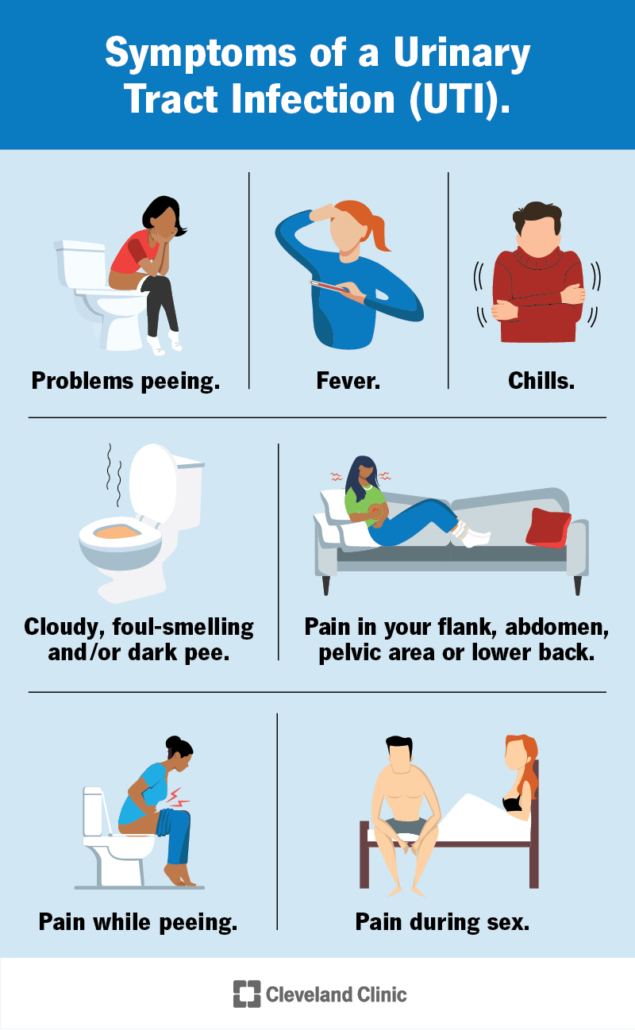
- A burning feeling when urinating
- A strong urge to urinate that doesn’t go away
- Urinating often, and passing small amounts of urine
- Urine that looks red, bright pink or cola-colored. This can be a sign of blood in the urine
- Pelvic pain. This pain occurs mostly in the center of the pelvis and around the area of the pubic bone
In older adults, UTIs may be missed or mistaken for other conditions”.5
In Urinary Tract Infections: What Are the Symptoms of A UTI? the Office on Women’s Health, U.S. Department of Health and Human Services, Womenshealth.gov note:
- Pain or burning when urinating
- An urge to urinate often, but not much comes out when you go
- Pressure in your lower abdomen
- Urine that smells bad or looks milky or cloudy
- Blood in the urine. This is more common in younger women. If you see blood in your urine, tell a doctor or nurse right away
- Feeling tired, shaky, confused, or weak. This is more common in older women
- Having a fever, which may mean the infection has reached your kidneys”.6
Cystitis
What is cystitis?
DotS the definition of cystitis may vary. The (United Kingdom) NHS’s definition is:
Cystitis Symptoms
What are the main symptoms of cystitis?
In Cystitis: Check If It’s Cystitis the NHS elaborate on:
- Pain, burning or stinging when you pee
- Needing to pee more often and urgently than usual
- Pee that’s dark, cloudy or strong smelling
- Pain low down in your tummy”.8
Menopause
Is there an association between menopause and UTIs?
In UTIs After Menopause: Why They’re Common and What to Do About Them – Blame Your Hormones, Not Yourself the author explains:
 “After menopause, UTIs are rarely caused by having a new partner or more sex, or by trying new sex positions, toys, or lubricants. There’s also no reason to blame being overweight, not urinating right after sex, or taking baths instead of showers.
There’s no solid research showing any of these things raise the risk for UTIs after menopause. Instead, UTIs are usually caused by the drop in the hormone estrogen that happens after menopause. (The same drop in estrogen happens if you have your ovaries removed or certain cancer treatments.)”.9
Treatment
After menopause, how may UTIs be treated?
In Urinary Tract Infections (UTIs): Preventing UTIs the JH include:
Note that you should not use douches or vaginal deodorants, as they can cause irritation and an unhealthy bacterial imbalance in your vagina.
Your doctor may recommend other treatments, such as long-term antibiotics”.10
Prevention
What steps can women take to help prevent a UTI?
In Urinary Tract Infection (UTI): Preventing UTIs the (Scottish) NHS Inform explain:
Do
- Go to the toilet as soon as you need to pee
- Always empty your bladder fully
- Stay well hydrated
- Wipe your bottom from front to back when you go to the toilet
- Pee as soon as possible after having sex
- Have a shower rather than a bath
- Wear underwear made from cotton, rather than synthetic material such as nylon
- Avoid tight jeans and trousers”.11
Cranberry Juice
Do cranberry juice and cranberry pills reduce the risk of getting a UTI?
In Is Cranberry Juice Good for A UTI?, dated 04 June 20245, the authors note:
Health Care Provider
What if I think I have a UTI?
In Urinary Tract Infections: A Note From Cleveland Clinic the (United States) Cleveland Clinic explain:
Health Topics A-Z
Where may I find Health Topics A-Z related to Urinary Tract Infection?
In Health Topics A-Z you may find:
Links
Where may I find Links relate to Urinary Tract Infection?
Your Country may have Links similar to:
Links
This Links List to third party websites is neither comprehensive nor exhaustive. Inclusion on this Links List does not imply endorsement or recommendation. Non-inclusion on this Links List does not imply non-endorsement or non-recommendation. Third party websites are not under the control of Meno Martha International Menopause Directory. Third party websites may contain explicit medical images and/or sexual references. Please read Meno Martha International Menopause Directory’s Links Policy before proceeding to a Link. Please contact Webmaster if you experience a problem with a Link.New or Updated
- EMAS On-Demand Webinars [European Menopause and Andropause Society] [Multiply Languages]: Genitourinary Syndrome of Menopause (GSM): Diagnosis and Evidence-Based Management
- Hormones and Urinary Symptoms In Women | Dr Louise Newson [17 August 2025]
- Online Events [International Menopause Society]: IMS Partnership Symposia Series – It Is Not Just Incontinence – Common Bladder Problems Around Menopause [15 April 2026]
- Online Events [International Menopause Society]: Past Webinars – 2025: The Burn, the Itch, the Pain, the Urge: GSM In Women
- Preventing Urinary Tract Infections After Menopause: What Every Woman Should Know [01 June 2025]
- Struggling With UTIs After Menopause? Experts Say This Can Make A Difference [19 June 2025]
 12 Best Home Remedies for UTIs
- 5 Tips To Prevent A Urinary Tract Infection
- A Potential New Oral Treatment Option for Recurrent Urinary Tract Infections
- BMS TV: Urogenital Atrophy
- Bladder
- Bladder Pain
- Complementary & Alternative Therapies: Non-Hormonal Treatments for Menopause Symptoms
- Complementary Medicines and Therapies for Hot Flushes
- Complementary Medicines and Therapies: Options for Menopausal Symptoms
- Complementary and Alternative Therapies for Genitourinary Syndrome of Menopause: An Evidence Map
- Consumer Video and Podcast Series: 2024 Consumer Videos and Podcasts – Preparing for Your Menopause Healthcare Visit
- Cystitis
- Cystitis
- Cystitis – Acute
- Cystitis – Non Infectious
- Dietary Supplements
- Do Home Remedies Work for UTIs?
- EMAS On-Demand Webinars [European Menopause and Andropause Society] [Multiply Languages]: Genitourinary Syndrome of Menopause (GSM): Diagnosis and Evidence-Based Management
- FAQS: Urinary Tract Infections (UTIs)
- FDA 101: Dietary Supplements
- FDA Approves Fosfomycin for Treating cUTIs [+ Video]
- FDA Direct: Removing Black Box Warnings for HRT (Part 1/2)
- FDA Direct: Removing Black Box Warnings for HRT (Part 2/2)
- Find A Menopause Practitioner [United States and Other]
- Find A Practitioner [Australasian Menopause Society i.e. Australia and New Zealand]
- Find Your Nearest BMS Menopause Specialist [British Menopause Society]
- First Symptoms of Menopause
- Gaslighting of Genitourinary Symptoms of the Menopause
- Genitourinary Syndrome of Menopause
- Hormones and Urinary Symptoms In Women | Dr Louise Newson
- How Menopause Impacts Your Health
- How Vaginal Hormones Can Transform Lives | The Dr Louise Newson Podcast
- Interstitial Cystitis
- Is Cranberry Juice Good for A UTI?
- Is It Too Late To Start HRT?
- Kidney Infection
- Later Years (Around 50 Years and Over): Menopause and Post Menopause Health – Signs and Symptoms of Menopause [+ Video: Talking Menopause With Your GP]
- Later Years (Around 50 Years and Over): Menopause and Post Menopause Health – Sexual Wellbeing, Intimacy and Menopause [+ Video: Menopause Is the End of Your Sex Life]
 Mayo Clinic Q and A: 6 UTI Myths and Facts
- Menopause
- Menopause
- Menopause
- Menopause Checklist Podcast: Episode 1: A Wee Problem
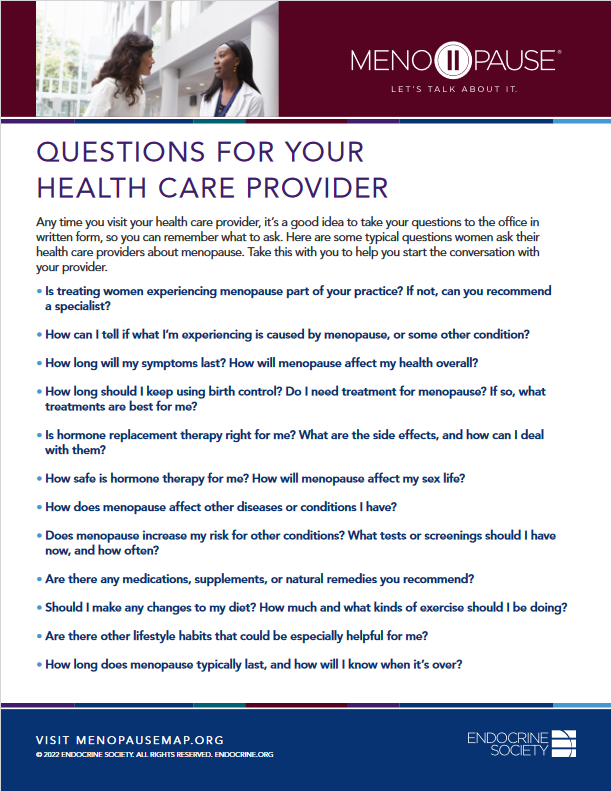
- Menopause Map: Downloadable Resources – My Personal Path Print Tools: Questions for Your Health Care Provider
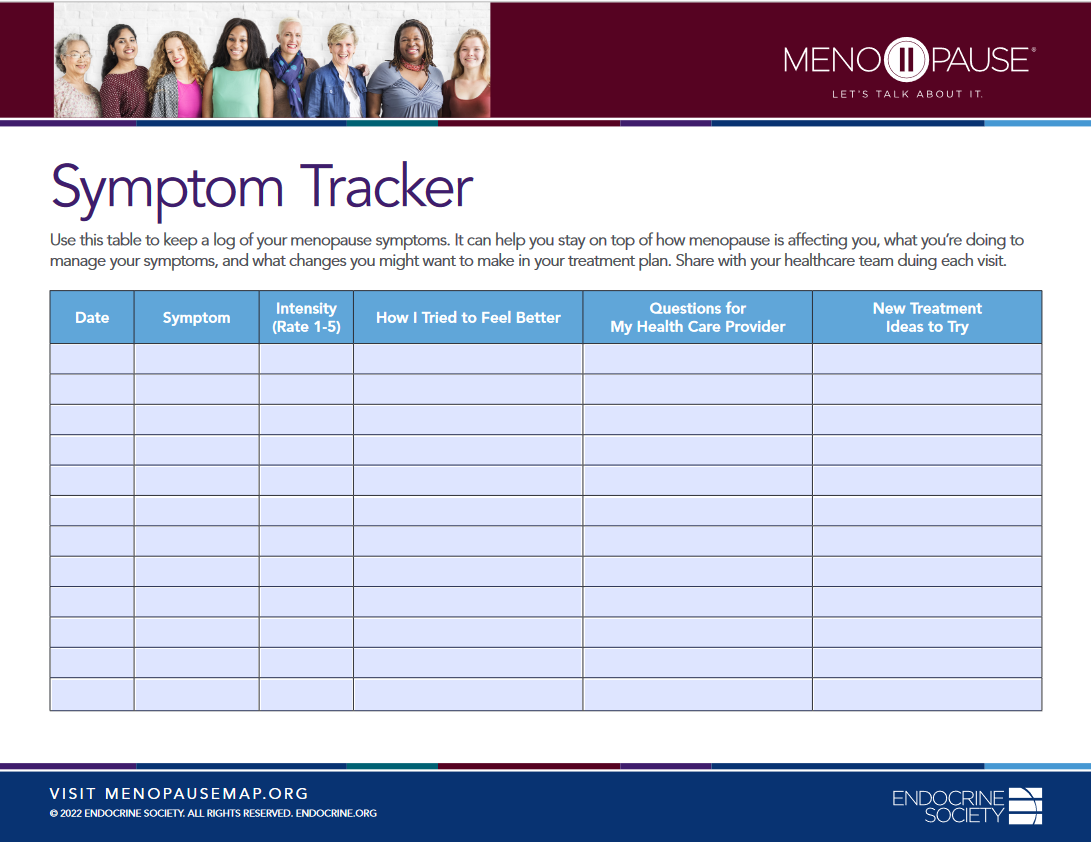
- Menopause Map: Downloadable Resources – My Personal Path Print Tools: Symptom Tracker
- National Center for Complementary and Integrative Health: Bilberry
- National Center for Complementary and Integrative Health: Cranberry
- National Center for Complementary and Integrative Health: Herbs At A Glance
- National Center for Complementary and Integrative Health: How Safe Is This Product or Practice?
- National Institute of Diabetes and Digestive and Kidney Diseases
- Navigating Menopause: Honest Answers To All Your Questions [+ Video: What To Expect in Menopause]
- Online Events [International Menopause Society]: IMS Partnership Symposia Series – It Is Not Just Incontinence – Common Bladder Problems Around Menopause
- Online Events [International Menopause Society]: Past Webinars – 2025: The Burn, the Itch, the Pain, the Urge: GSM In Women
- Painful Urination (Dysuria)
- Perimenopause and Menopause Checklist: Translated Checklists
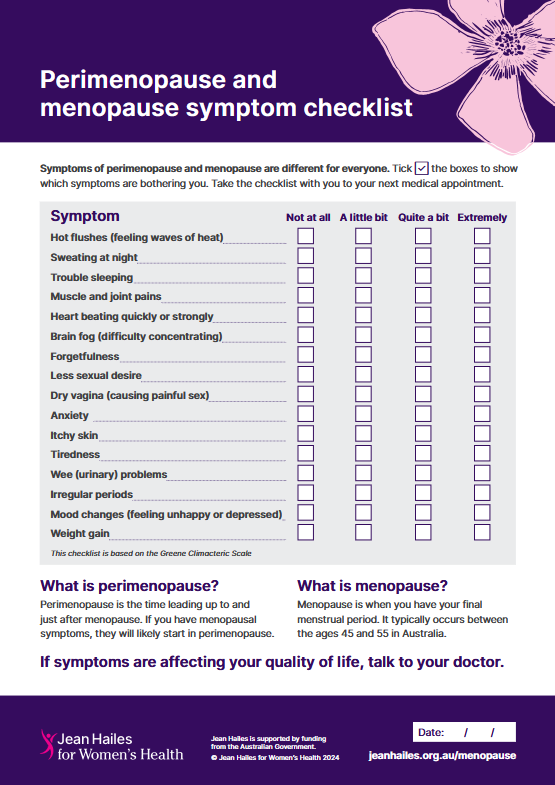
- Perimenopause and Menopause Symptom Checklist
- Preventing Urinary Tract Infections After Menopause: What Every Woman Should Know
- Self-Help Guide: Urinary Infection
- Struggling With UTIs After Menopause? Experts Say This Can Make A Difference
- Surprising Menopause Symptoms | Dr Louise Newson Live
- Supplements: What Works, What Doesn’t and the Truth About Menowashing
- UTI: This Common Infection Can Be Serious
- UTIs After Menopause: Why They’re Common and What to Do About Them
- Urinary Tract Infection (UTI)
- Urinary Tract Infection (UTI) [+ Video]
- Urinary Tract Infection (UTI): Diagnosis & Treatment
- Urinary Tract Infection (UTI): Symptoms & Causes
- Urinary Tract Infections
- Urinary Tract Infections
- Urinary Tract Infections
- Urinary Tract Infections (UTIs)
- Urinary Tract Infections (UTIs)
- Urinary Tract Infections (UTIs): Causes
- Urinary Tract Infections (UTIs): Check If Is A Urinary Tract Infection (UTI)
- Urinary Tract Infections (UTIs): How To Prevent Urinary Tract Infections (UTIs)
- Urinary Tract Infections (UTIs): Management and Treatment
- Urinary Tract Infections (UTIs): Preventing UTIs
- Urinary Tract Infections (UTIs): Recurrent UTIs
- Urinary Tract Infections (UTIs): Symptoms
- Urinary Tract Infections In Adults [+ Video: Urinary Tract Infections (UTIs): Most Commonly Asked Questions — Urology Care Foundation
- Urogenital Problems
- Using Natural Therapies In the Menopause Transition – Webinar
- Webinars: The Burn, the Itch, the Pain, the Urge: GSM In Women
- What Is the Connection Between Menopause and UTIs?
- When Urinary Tract Infections Keep Coming Back
- Why You Get UTIs After Sex — and How To Prevent Them
Sources
Where may I find the Sources quoted?
You may find the Sources quoted at:
Sources
- Cichowski, S. B. UTIs After Menopause: Why They’re Common and What to Do About Them – Blame Your Hormones, Not Yourself. Published: November 2023 https://www.acog.org/womens-health/experts-and-stories/the-latest/utis-after-menopause-why-theyre-common-and-what-to-do-about-them Accessed: 10 January 2026
- Urinary Tract Infection (UTI): Symptoms & Causes — Overview. 26 September 2025. Mayo Clinic https://www.mayoclinic.org/diseases-conditions/urinary-tract-infection/symptoms-causes/syc-20353447 Accessed: 10 January 2026
- Urinary Tract Infections (UTIs): What Is A UTI? Last Updated: 05 December 2024 | Last Reviewed: 17 January 2024. Jean Hailes for Women’s Health https://www.jeanhailes.org.au/health-a-z/bladder/urinary-tract-infections-utis Accessed: 10 January 2026
- Mayo Clinic Q and A: 6 UTI Myths and Facts: Answer. 06 February 2023. Mayo Clinic https://newsnetwork.mayoclinic.org/discussion/mayo-clinic-q-and-a-6-uti-myths-and-facts/ Accessed: 10 January 2026
- Urinary Tract Infection (UTI): Symptoms & Causes — Overview. 26 September 2025. Mayo Clinic https://www.mayoclinic.org/diseases-conditions/urinary-tract-infection/symptoms-causes/syc-20353447 Accessed: 10 January 2026
- Urinary Tract Infections: What Are the Symptoms of A UTI? Page Last Updated: 24 October 2024. Office on Women’s Health, U.S. Department of Health and Human Services, Womenshealth.gov https://www.womenshealth.gov/a-z-topics/urinary-tract-infections Accessed: 10 January 2026
- Cystitis. Page Last Reviewed: 11 February 2022. NHS https://www.nhs.uk/conditions/cystitis/ Accessed: 10 January 2026
- Cystitis: Check If It’s Cystitis. Page Last Reviewed: 11 February 2022. NHS https://www.nhs.uk/conditions/cystitis/ Accessed: 10 January 2026
- Cichowski, S. B. UTIs After Menopause: Why They’re Common and What to Do About Them – Blame Your Hormones, Not Yourself. Last Reviewed: August 2025. https://www.acog.org/womens-health/experts-and-stories/the-latest/utis-after-menopause-why-theyre-common-and-what-to-do-about-them Accessed: 10 January 2026
- Urinary Tract Infections (UTIs): Preventing UTIs. Last Updated: 05 December 2024 | Last Reviewed: 17 January 2024. Jean Hailes for Women’s Health https://www.jeanhailes.org.au/health-a-z/bladder/urinary-tract-infections-utis Accessed: 10 January 2026
- Urinary Tract Infection (UTI): Preventing UTIs. Last Updated: 03 October 2025. NHS Inform https://www.nhsinform.scot/illnesses-and-conditions/kidneys-bladder-and-prostate/urinary-tract-infection-uti Accessed: 10 January 2026
- Morgan, K. and Begum, J. Is Cranberry Juice To Stop A UTI? 04 June 2025. https://www.webmd.com/a-to-z-guides/cranberries-for-uti-protection Accessed: 10 January 2026
- Urinary Tract Infections: A Note From Cleveland Clinic. Last Reviewed: 06 April 2023. Cleveland Clinic https://my.clevelandclinic.org/health/diseases/9135-urinary-tract-infections Accessed: 10 January 2026
Topic Last Updated: 14 June 2026 – Topic Last Reviewed: 10 January 2026